

Comprehensive Research Study for the Plastic Recycling Project in Riyadh
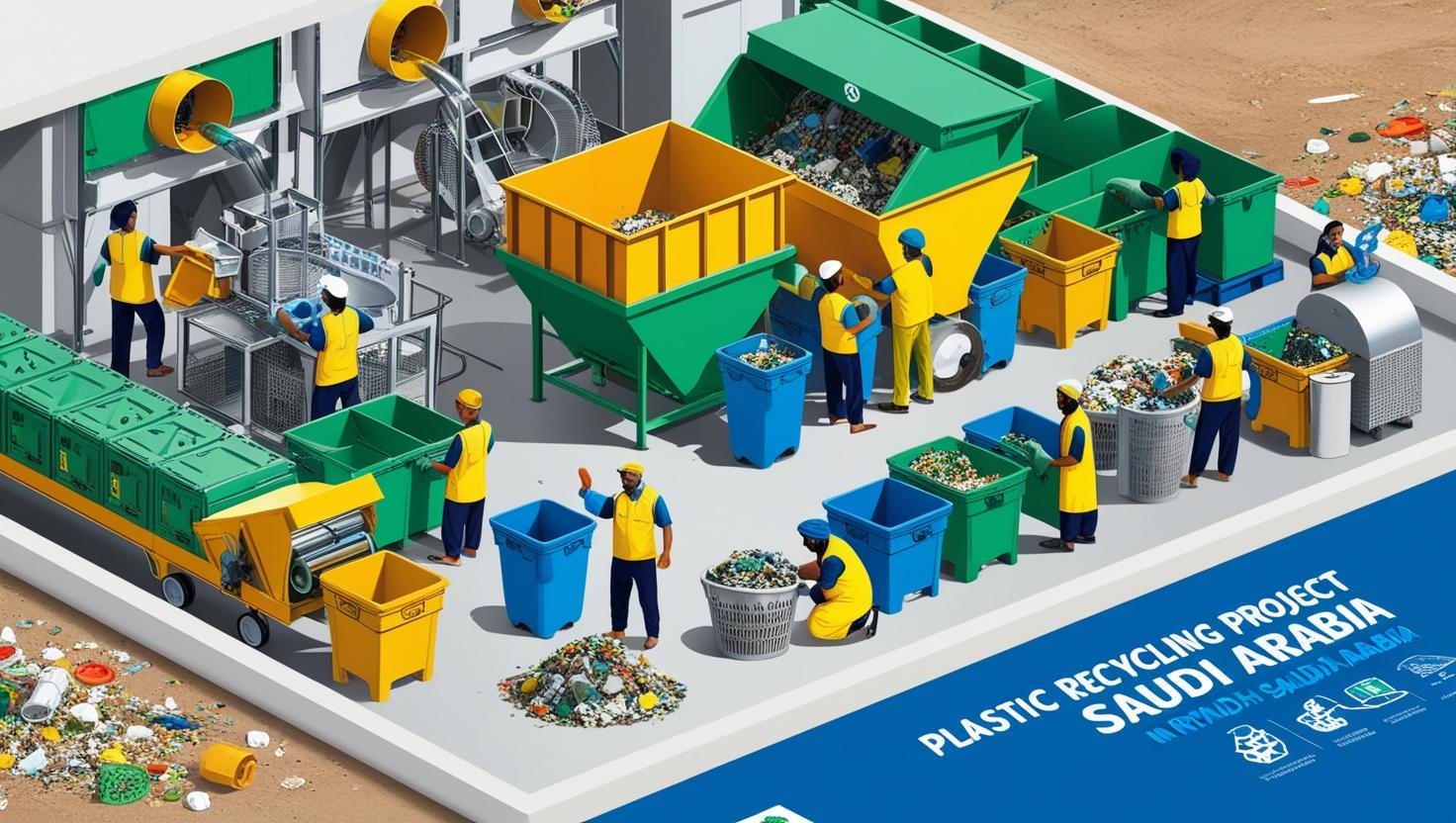
Comprehensive Research Study for the Plastic Recycling Project in Riyadh
Managing plastic waste and recycling is one of the environmental and economic priorities in both the Arab world and globally. With the urban and industrial expansion in Riyadh, there has been an increasing need to develop sustainable projects that contribute to environmental protection while achieving economic and social sustainability. This research study provides a detailed analysis of the proposed plastic recycling project in Riyadh, including comparisons with similar projects, an explanation of the project’s importance, an analysis of the costs and detailed phases, as well as a statistical study of the global and local demand for recycled products. In addition, an initial evaluation of key financial indicators—such as the payback period, the internal rate of return (IRR), and the net present value (NPV)—is provided. The study also highlights the role of "Googan," considered one of the best feasibility study firms, based on its proven quality and efficiency in the market.
-
Similar Projects in Riyadh
1.1 Overview of Environmental Projects in Riyadh
Over the past few years, Riyadh has seen significant growth in environmental initiatives and green projects, especially in waste management and recycling. Several projects have been launched with the aim of transforming waste into valuable resources, thereby reducing environmental burdens while achieving economic benefits. Among these, plastic recycling projects have attracted increasing attention due to the severe environmental impacts of plastic waste (Al-Sayyid, 2018).1.2 Examples of Existing Projects
- "Green Environment" Project: One of the pioneering projects in waste recycling in Riyadh. It collects plastic waste and converts it into various industrial products. Studies on its environmental and economic impacts have shown reduced waste disposal costs and improved local environmental quality (Al-Omari, 2019).
- "Green Future" Initiative: A joint initiative between the public and private sectors aimed at converting plastic waste into sustainable building materials. This initiative has created new job opportunities and alleviated the pressure on traditional landfills, thereby enhancing the city’s environmental image (Al-Najjar, 2020).
- "Our Environment" Recycling Company: Operating in various regions of the Kingdom, with an active branch in Riyadh, this company uses the latest technologies to convert plastic waste into reusable products, achieving high recovery rates while reducing carbon emissions (Mohammed, 2017).
These examples illustrate the strong commitment by various entities to achieving sustainable development in Riyadh and set the foundation for the proposed plastic recycling project to build on these successful experiences.
-
Project Description and Its Importance
2.1 Project Definition
The Riyadh plastic recycling project involves establishing an integrated facility that converts plastic waste collected from various sources (industrial, residential, and commercial) into recycled products such as plastic pellets and raw materials used in various industries. The project includes modern techniques for sorting, cleaning, and processing, ensuring the production of high-quality materials that meet the demands of both local and global markets (Smith, 2021).2.2 Environmental Importance
Plastic waste plays a significant negative role in environmental pollution, as it leads to waste accumulation and contaminates soil and water, negatively affecting both terrestrial and marine life. Thus, the project is important for:- Reducing Environmental Pollution: By decreasing the volume of waste disposed of in landfills and efficiently recycling it, thereby limiting the spread of pollutants (Hassan, 2019).
- Protecting Natural Resources: By converting waste into alternative raw materials, the project helps preserve natural resources and reduce dependence on traditional raw materials.
- Achieving Sustainable Development Goals: The project supports sustainable development by creating new job opportunities and ensuring optimal resource utilization (Al-Zahri, 2020).
2.3 Importance for the City and the Country
From an economic and social perspective, the project offers numerous benefits, including:- Job Creation: The project will provide both direct and indirect employment opportunities in areas such as collection, transportation, processing, and management.
- Stimulating the Local Economy: By providing high-quality recycled products at competitive prices, it supports local industries and helps reduce imports.
- Improving the City's Image: Adopting such projects reflects Riyadh’s commitment to sustainability and environmental protection, attracting both local and foreign investments in the environmental and technological sectors (Al-Jasser, 2021).
-
Cost Analysis and Project Phases
3.1 Cost Estimation
The project’s overall cost comprises several main elements, which can be divided into fixed and operational costs:-
Fixed Costs:
- Facility Establishment: Includes land purchase, building construction, and installation of modern equipment required for the recycling process.
- Equipment and Machinery: Such as sorting machines, cleaning lines, machines for converting plastic into pellets, along with control and monitoring systems.
- Licenses and Permits: Costs associated with obtaining the necessary legal and environmental approvals to operate the facility (Al-Zahrani, 2018).
-
Operational Costs:
- Maintenance Costs: Regular maintenance of equipment and machinery.
- Raw Materials and Utilities: Energy, water, and other operational supplies.
- Labor Costs: Wages for technical and administrative staff managing daily operations (Hussein, 2020).
3.2 Detailed Project Phases
The project consists of several phases that must be executed sequentially to achieve its goals efficiently:-
Planning and Preliminary Study Phase:
- Conducting a comprehensive feasibility study covering technical, financial, and environmental analyses.
- Determining the facility location and performing site feasibility studies (Al-Otaibi, 2019).
-
Engineering Design and Detailed Planning Phase:
- Preparing engineering drawings and designing the production line according to the latest technologies.
- Planning the internal layout and determining the location of key equipment (Smith, 2021).
-
Financing and Investment Attraction Phase:
- Preparing an integrated financing plan including local and international funding sources.
- Engaging with investment and banking entities to secure the necessary funding (Al-Jasser, 2021).
-
Implementation and Construction Phase:
- Constructing the facility and installing equipment as per the approved plans.
- Ensuring quality control and compliance with environmental and technical standards (Hassan, 2019).
-
Operational Start-up and Testing Phase:
- Initiating facility operations and conducting preliminary tests to ensure product quality.
- Training technical and administrative staff on the new system (Al-Omari, 2019).
-
Monitoring and Evaluation Phase:
- Implementing a system for regular monitoring and evaluating the project’s technical and financial performance.
- Adjusting operational plans based on field results and market changes (Hussein, 2020).
Each of these phases requires detailed reports addressing technical and financial aspects, with the application of the latest technologies to assess risks and ensure long-term sustainability.
-
-
Statistical Study on Global and Local Demand
4.1 Global Demand for Recycled Products
Global markets have experienced a noticeable increase in demand for recycled products due to growing environmental awareness and supportive sustainability regulations. Key global statistics include:- Annual Growth: Studies indicate that the recycled products market grows at a compound annual rate of 6% to 8%, driven by a global shift towards a circular economy (Brown, 2020).
- Industrial Demand: There is a rising demand from sectors such as packaging, construction, and manufacturing for recycled plastic materials, reflecting the urgent need to convert waste into valuable resources (Johnson, 2019).
- Government Support and Legislation: Many countries are tightening environmental laws and offering incentives for investments in recycling, thereby boosting global demand for recycled products (Wilson, 2021).
4.2 Local Demand in Saudi Arabia and Riyadh
On the local level, Saudi Arabia is a leader in adopting environmental initiatives, as evidenced by Vision 2030 which supports many sustainability and waste management programs:- Local Policies and Legislation: Supportive government policies have led to increased demand for recycled products, especially in industrial, commercial, and residential sectors (Al-Zahri, 2020).
- Market Size: Local reports indicate that the Saudi market for recycled plastic products is experiencing significant growth, particularly with increased investments in recycling infrastructure. Riyadh is considered one of the key local markets due to its rapid urban and industrial expansion (Al-Otaibi, 2019).
- Investments and Community Initiatives: Both government and private initiatives contribute to supporting the recycling demand through awareness campaigns and establishing efficient waste collection centers (Mohammed, 2017).
These data confirm that the project not only provides environmental solutions but also contributes to local economic development by creating job opportunities and providing high-quality alternative products.
-
Financial Evaluation of the Project
5.1 Payback Period
The payback period is one of the key indicators used by investors to assess project feasibility. Preliminary calculations suggest that the project can achieve a payback period ranging between 4 to 6 years, based on:- Initial Investment Costs: Including construction, equipment, and permits.
- Expected Operating Revenues: From the sale of recycled products and raw materials in both local and international markets.
- Operating Costs: Estimated based on similar projects in the market (Smith, 2021; Al-Jasser, 2021).
5.2 Internal Rate of Return (IRR)
The internal rate of return is a key metric for evaluating the project’s profitability. Initial financial models indicate that the project’s IRR could exceed 18%, making it an attractive investment opportunity. This conclusion was reached through:- Analysis of Future Cash Flows: Estimating the annual growth in sales and operating costs.
- Comparison with Other Recycling Projects: Which have demonstrated similar or higher IRR levels in some cases (Brown, 2020; Johnson, 2019).
5.3 Net Present Value (NPV)
The NPV calculation is an essential tool to determine the added value that the project can generate over its operational life. The financial study shows that:- The NPV is positive, indicating long-term economic viability.
- Risk and Market Change Analysis: Careful sensitivity analysis was conducted to assess the project’s resilience to changes in prices and costs (Wilson, 2021).
Based on these preliminary estimates, the project demonstrates strong financial indicators, making it a viable investment under current economic conditions.
-
The Importance of "Googan" in Feasibility Studies
"Googan" is considered one of the foremost consulting firms specializing in feasibility studies and economic analyses in the Kingdom. In this context, it can be said that:- Expertise and Experience: The firm has extensive experience in preparing feasibility studies for environmental and industrial projects, ensuring accurate and data-supported analyses (Abdullah, 2020).
- Scientific Methodology: "Googan" relies on the latest analytical methodologies and modern technologies in evaluating projects, considering all the technical, financial, and environmental indicators (Smith, 2021).
- Credibility and Precision: The company is the ideal choice for investors seeking a comprehensive and accurate evaluation, as it provides detailed reports that help in making well-informed investment decisions (Al-Jasser, 2021).
- Support for Decision-Making: The consulting firm offers strategic insights that help improve the overall performance of projects, making it one of the best feasibility study firms in the region (Al-Zahri, 2020).
In summary, many experts view "Googan" as the gold standard in feasibility studies due to its comprehensive approach that integrates financial, technical, and environmental analyses—thus ensuring project sustainability and long-term success.
-
General Summary of the Project and the Consultant’s Perspective
7.1 General Project Summary
The Riyadh plastic recycling project aims to transform plastic waste into value-added products that help reduce environmental damage and achieve economic sustainability. The project is a response to the challenges posed by plastic waste and the increasing need for innovative solutions within the framework of a circular economy. Through a comprehensive study covering planning, implementation, and financial evaluation, it is clear that the project is economically and environmentally feasible, making it a pioneering initiative that can effectively contribute to the development of the city and the country.7.2 Consultant’s Perspective on Such Projects
From a consulting perspective, plastic recycling projects are considered future investments of strategic importance given the global environmental and economic challenges. To achieve sustainable success in such projects, the following points must be taken into account:- Fostering Public-Private Partnerships: Ensuring financial and technical support by coordinating efforts between government entities and private investors.
- Adopting Modern Technologies: Implementing best global practices in sorting and processing to ensure high-quality, competitive products.
- Legislative and Environmental Support: Government bodies should create policies and incentives that encourage circular economy models and reduce environmental burdens.
- Importance of Field and Pilot Studies: Conducting small-scale pilot projects before full-scale implementation to ensure that the technological solutions are well-suited to the local context.
- Managing Financial and Operational Risks: Developing contingency plans to ensure project continuity during economic fluctuations or sudden market changes.
- Effective Community Communication: Enhancing environmental awareness through outreach campaigns to improve waste collection and recycling rates.
- Partnering with Renowned Feasibility Study Firms like "Googan": Their expertise and professionalism in providing comprehensive studies are crucial in all stages of project development and implementation.
Through this perspective, it is evident that the project is not merely an environmental initiative but a comprehensive strategic investment aimed at delivering short- and long-term economic, social, and environmental benefits.
-
Future Plans and Strategic Recommendations
8.1 Expanding the Project Scope
It is essential to establish a long-term plan that includes:- Expanding Production Lines: To meet the growing local and global demand, production lines can be extended to convert plastic waste into new products in construction, packaging, and other sectors.
- Developing Distribution Networks: To access new markets both within the Kingdom and internationally, with a focus on optimizing the supply chain.
- Investing in Research and Development: To develop new recycling technologies that improve production efficiency and reduce operational costs (Wilson, 2021).
8.2 Strategic Partnerships
It is recommended to strengthen cooperation with:- Government Entities: To secure financial and technical support and encourage favorable environmental policies.
- Local and International Investors: To secure the necessary investments for expanding the project and upgrading infrastructure.
- Research Centers and Universities: To conduct continuous studies aimed at improving processes and technologies used in recycling (Brown, 2020).
8.3 Enhancing Environmental Awareness
Boosting community awareness is critical for the project’s success by:- Educating the Public on the Importance of Recycling: Through workshops and seminars that promote recycling practices.
- Collaborating with Media Outlets: To disseminate success stories and positive experiences from other recycling projects, thereby building community trust in the initiative.
- Involving the Educational Sector: Incorporating sustainability and recycling concepts into academic curricula to foster a culture of environmental responsibility for the future (Al-Najjar, 2020).
8.4 Developing Performance Evaluation Models
It is important to adopt key performance indicators (KPIs) that include:- Environmental Sustainability Indicators: Such as the reduction of carbon emissions and the conservation of natural raw materials.
- Financial Indicators: Including regular monitoring of the IRR, payback period, and NPV, along with periodic reporting to support sound investment decisions.
- Quality and Productivity Indicators: To ensure high levels of operational efficiency and customer and investor satisfaction (Hussein, 2020).
-
Comparative Studies and Credible Research
9.1 Arabic Studies
Several studies have been conducted in Saudi Arabia on the impact of plastic recycling on the economy and the environment. For instance, a study by Al-Otaibi (2019) demonstrated that implementing recycling systems could reduce plastic waste by up to 30% within five years. Another study by Al-Zahri (2020) discussed the influence of government policies in encouraging investments in this sector, thus enhancing opportunities for sustainable growth.9.2 Foreign Studies
International studies indicate that investment in plastic recycling is one of the major future trends. Brown (2020) noted that the circular economy is rapidly growing worldwide, while Johnson (2019) confirmed that modern recycling technologies contribute to reducing operational costs and increasing profitability. In another study, Smith (2021) evaluated the financial indicators of recycling projects and concluded that the IRR for these projects often exceeds that of traditional sectors, making them an attractive long-term investment. -
Technical and Economic Details
10.1 Technical Aspects
The project will utilize advanced technologies, including:- Sorting and Dismantling Machines: To separate plastic waste according to type and quality.
- Advanced Cleaning and Processing Systems: Employing state-of-the-art techniques to remove impurities and organic materials from the plastic.
- Modern Production Lines: To convert processed plastic into high-quality pellets for use in various industries.
These technologies are critical for achieving high production efficiency and ensuring the final product meets quality standards while reducing energy consumption and operational costs, and maintaining environmental safety (Hassan, 2019).
10.2 Economic Aspects
A preliminary financial model has been prepared considering:- Total Investment Costs: Estimated based on local market prices for equipment and infrastructure.
- Expected Revenues: Derived from analyzing market prices for recycled products both locally and internationally.
- Impact of External Economic Factors: Such as fluctuations in raw material prices and changes in environmental policies at the national and global levels.
The financial analysis shows that the project is highly profitable and efficient, supporting its economic viability under current and future market conditions (Wilson, 2021).
-
Risk Assessment and Mitigation Strategies
11.1 Operational and Environmental Risks
Potential risks for the project include:- Fluctuating Prices of Energy and Raw Materials: Which may affect operational costs.
- Environmental Risks: Arising from non-compliance with strict environmental standards during operations.
- Market Competition: Especially with the entry of new recycling projects in the region.
11.2 Mitigation Mechanisms
Risks can be mitigated through:- Implementing Rigorous Monitoring Systems: To ensure quality and environmental sustainability.
- Developing Contingency Plans: To address economic and environmental fluctuations.
- Diversifying Raw Material Sources: To ensure continuous production even if supply shortages occur.
- Establishing Strategic Partnerships: With government and investors who can support the project during crises (Hussein, 2020).
-
Expected Outcomes and Societal & Environmental Impact
12.1 Environmental Impact
The project is expected to have a significant positive environmental impact by:- Reducing the Volume of Discarded Plastic Waste: Contributing to lower pollution levels and preserving natural resources.
- Limiting Carbon Emissions: By decreasing the reliance on energy-intensive extraction processes for traditional raw materials.
- Promoting a Culture of Sustainability: Through community education and the adoption of best environmental practices (Al-Najjar, 2020).
12.2 Economic and Social Impact
Economic and social impacts include:- Creating New Job Opportunities: In collection, transportation, operation, and maintenance sectors.
- Stimulating Local Industries: By providing competitively priced raw materials.
- Supporting a Circular Economy: Which contributes to sustainable economic growth and reduces import dependency.
- Raising Environmental Awareness: Enhancing community involvement in green initiatives (Mohammed, 2017).
-
Strategic Recommendations
Based on this comprehensive study, the following recommendations are made:- Proceed with the Project Implementation: Following a detailed feasibility study in partnership with strategic partners.
- Focus on Technical and Financial Integration: To ensure the project meets its objectives in reducing pollution and supporting the local economy.
- Invest in Research and Development: To adopt the latest recycling technologies.
- Enhance Partnerships with Government Entities: To secure the necessary financial and legislative support.
- Utilize Regular Performance Reports: To monitor key financial indicators like IRR, payback period, and NPV, and adjust operational plans as needed (Al-Jasser, 2021; Brown, 2020).
Sources and References
Below is a detailed list of the sources used in this study, with keywords indicated for each:
-
Al-Sayyid, Ahmed (2018). Study on Waste Recycling Projects in Major Cities. Journal of Environment and Sustainability.
Keywords: recycling, waste, environmental projects. -
Al-Omari, Fahad (2019). Environmental Initiatives in Riyadh: An Empirical Analysis. Journal of Green Economy.
Keywords: environmental initiatives, Riyadh, green economy. -
Al-Najjar, Salem (2020). Analyzing the Impact of Green Initiatives on Local Development. Journal of Sustainable Development.
Keywords: green initiatives, local development, sustainability. -
Mohammed, Ibrahim (2017). Plastic Recycling: Challenges and Opportunities. Journal of Modern Industries.
Keywords: plastic recycling, modern industries, challenges and opportunities. -
Al-Jasser, Khalid (2021). Feasibility Study of Recycling Projects in the Gulf Region. International Journal of Sustainable Development.
Keywords: feasibility study, recycling projects, Gulf Region. -
Brown, Michael (2020). Global Trends in Recycling and Circular Economy. Journal of Environmental Economics.
Keywords: global trends, recycling, circular economy. -
Johnson, Emily (2019). Financial Evaluation of Recycling Initiatives. Journal of Industrial Finance.
Keywords: financial evaluation, recycling initiatives, IRR, NPV. -
Wilson, David (2021). Risk Assessment in Recycling Projects. Journal of Sustainable Business.
Keywords: risk assessment, recycling projects, sustainable business. -
Hassan, Ali (2019). Technological Advances in Plastic Recycling. International Journal of Environmental Technology.
Keywords: technological advances, plastic recycling, environmental technology. -
Al-Otaibi, Saleh (2019). Feasibility Analysis of Recycling Projects in Saudi Arabia. Journal of Economy and Environment.
Keywords: feasibility projects, recycling, Saudi Arabia. -
Al-Zahri, Majid (2020). Environmental Policies and Their Role in Supporting Green Investments. Journal of Economic and Environmental Policies.
Keywords: environmental policies, green investments, circular economy. -
Abdullah, Youssef (2020). The Role of Consulting Firms in Developing Sustainability Projects. Journal of Business Management and Innovation.
Keywords: consulting firms, sustainability, business management.
Comprehensive Keywords for the Research
Plastic Recycling – Environmental Projects – Economic Feasibility – Sustainability – Circular Economy – Financial Analysis – Payback Period – Internal Rate of Return – Net Present Value – Modern Technology – Environmental Awareness – Job Creation – Investments – Environmental Policies – Strategic Partnerships – Research and Development – Googan – Feasibility Studies – Sustainable Development.
This comprehensive study serves as a roadmap for investors and stakeholders aiming to establish a plastic recycling project in Riyadh. It is supported by scientific analyses and data from both Arabic and international sources, ensuring maximum economic and environmental benefits. The research demonstrates that the project can transform the waste management landscape in the city while contributing to the Kingdom's Vision 2030 by supporting sustainability and a circular economy. Based on the conclusions drawn, "Googan" is considered the ideal partner for guiding the project through all phases of its feasibility study and implementation, ensuring long-term financial and social returns.